
Glazed Doors
-
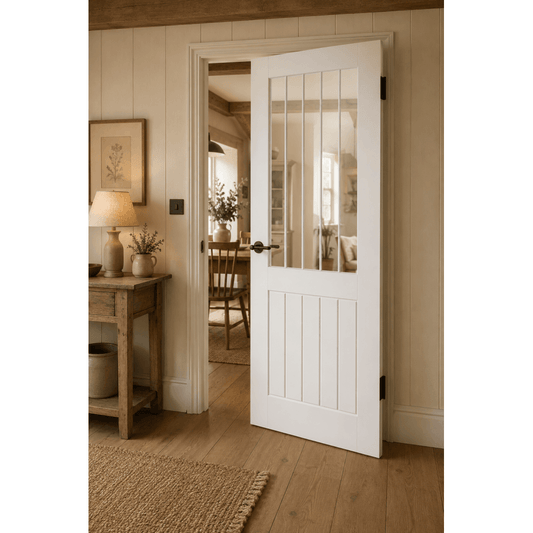
LPD Smooth Cottage White Primed Glazed Internal Door SMOCOTGL
Regular price £107.25Regular price -
LPD Pattern 10 Frosted Glazed Primed White Internal Door WFP10FG
Regular price From £123.00Regular price -
LPD Ladder Light Grey Glazed Fully Finished Internal Laminated Door LAMLGRLADGL
Regular price £123.00Regular price -
LPD Sydney Light Grey Glazed Fully Finished Internal Laminated Door LAMLGRSYDGL
Regular price £123.00Regular price -
LPD Ladder White Fully Finished Laminated Internal Glazed Door LAMWHILADGL
Regular price £123.00Regular price -
LPD Sydney Fully Finished Laminated White Internal Fire Door LAMWHISYDFC
Regular price £123.50Regular price -
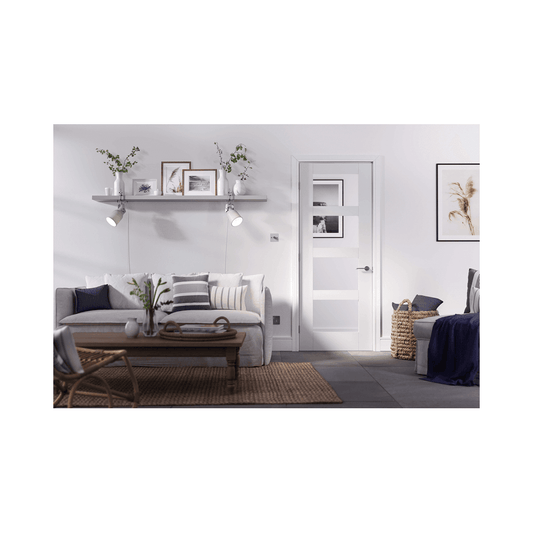
LPD Shaker 4 Light Glazed Primed White Internal Door WFSHAKER4L
Regular price From £126.00Regular price -
LPD Pattern 10 Clear Glazed Primed White Internal Door WFP10G
Regular price From £126.00Regular price -
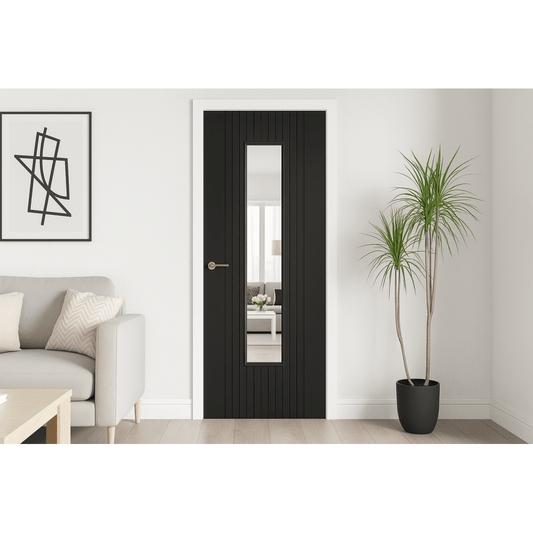
LPD Sydney Fully Finished Laminated Black Internal Glazed Door LAMBLKSYDGL
Regular price £127.00Regular price -
Deanta Coventry White Primed Internal Door with Clear Glass 35COVGCWH
Regular price From £130.50Regular price£153.00Sale price From £130.50Save £22.50
Sale -
Deanta Denver White Primed Internal Door with Clear Glass 35NM6GWHP
Regular price £130.50Regular price£153.00Sale price £130.50Save £22.50
Sale -
LPD Lincoln Glazed Primed White Internal Door WFLINCOLNG
Regular price From £137.28Regular price -
LPD Mexicano 3/4 Glazed Primed White Internal Door WFMEX1L
Regular price £138.84Regular price -
LPD Textured Mayfair Glazed White Internal Door MAY2P2L
Regular price £140.70Regular price -
LPD London Glazed Primed White Internal Door WFLONG
Regular price From £142.50Regular price -
LPD Sydney Fully Finished Laminated White Internal Glazed Door LAMWHISYDGL
Regular price £143.45Regular price -
LPD Girona White Primed Internal Glazed Door GIRWPCG
Regular price From £144.02Regular price -
LPD Belize Unfinished Internal Oak Glazed Door OBELG
Regular price From £145.50Regular price -
LPD Pattern 10 Clear Glazed Unfinished Oak Internal Door OP10G
Regular price From £146.25Regular price -
Deanta Eton White Primed Internal Door with Clear Glass 35ETOGWHP
Regular price From £147.00Regular price£172.80Sale price From £147.00Save £25.80
Sale -
LPD White Primed Barn Glazed Internal Door WFBARNGL
Regular price £149.50Regular price -
LPD Utah Clear Glazed Primed White Internal Door WFUTAH
Regular price £153.00Regular price -
Girona Unfinished Internal Oak Glazed Door GIROAKCGUF
Regular price From £153.50Regular price -
Deanta Walden Unfinished Internal Oak Door with Clear Glass 35NM6GCUNX
Regular price £153.75Regular price£180.90Sale price £153.75Save £27.15
Sale
















About this range
- From
- £107.25
- Products
- 284
- Materials
- Oak, White primed, Walnut, Laminate, Ash
- Finishes
- Fully finished, Primed, Unfinished, Pre-finished
- Glazing
- Glazed
- Brands
- LPD, Deanta, Mendes, Doors2Floors
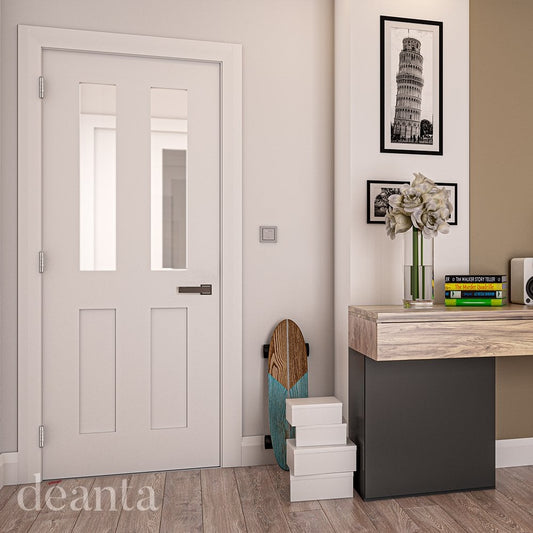
A glazed internal door exists to move light from a room that has a window into a space that does not. Hallways, landings, understairs studies and inner rooms in terraced houses all suffer the same problem, and no amount of paint fixes it. Putting glass in the door is the cheapest structural answer. This collection holds 284 glazed internal doors from LPD, Deanta, Mendes and our own Doors2Floors label, from £107.25 to £1,300.
Choosing the glass, not just the door
The glass type decides how much light comes through and how much you can see. There are four families here and they are not interchangeable.
Clear glass
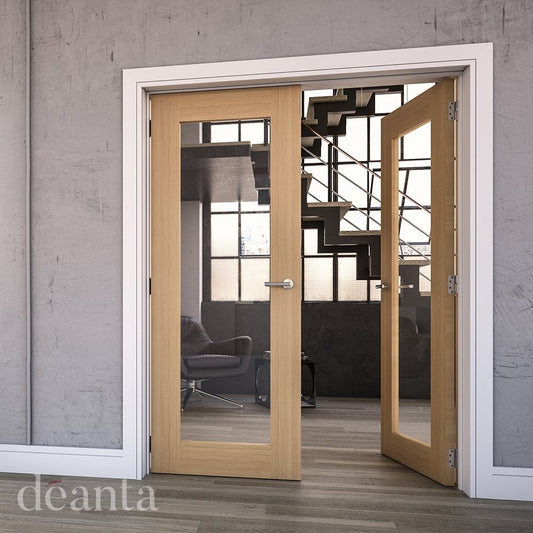
More than 115 doors, the largest group by a wide margin. Clear glass gives maximum light transfer and full visibility, which is what you want between a hallway and a living room and what you do not want on a bathroom. It also lets you see whether a room is occupied before opening the door, which matters more in a family house than people expect. See clear glazed doors.
Frosted glass
More than 20 doors. Frosted, sometimes described as obscure or satin, passes almost as much light as clear glass while removing detail. It is the standard choice for bathrooms, cloakrooms, home offices and any bedroom where the door faces a landing. See frosted glazed doors.
Reeded glass
7 doors. Reeded, or fluted, glass has vertical ribs that break the view while keeping a strong period character. It has come back into fashion because it suits both a Victorian hallway and a contemporary kitchen, and it distorts rather than dulls the light, which gives a softer effect than frosting. See reeded glazed doors.
Tinted glass
5 doors. Tinted or smoked glass reduces glare and adds depth, and it is usually paired with a dark frame for a contemporary look. It passes less light than the other three, so it belongs where light is plentiful rather than scarce. See tinted glazed doors.
How much light a glazed door actually gains
The honest answer is that the area of glass matters more than the type. A door with two narrow vision panels moves far less light than one with a full height glazed panel, whatever the glass. If a dark hallway is the problem, choose the largest glazed area the design allows, and consider a matching side panel to widen the aperture rather than a wider door. See internal side panels and room dividers.
Glazed fire doors
56 of the doors here are both glazed and fire rated. Glass in a fire door is a tested fire resisting unit set in a tested bead, and it cannot be substituted, reglazed or repaired on site. A vision panel is genuinely useful on a kitchen or stairwell fire door, because it lets you check the far side before opening. See glazed fire doors, internal glazed fire doors and our fire door guide.
Safety glass and where it is required
Glazing in and around doors is treated as critical location glazing, which means it has to be toughened or laminated, or protected, or small enough to be exempt. The doors here are supplied with appropriate glass already fitted, so the decision is made for you, but it is worth knowing why you cannot simply cut a hole in an existing solid door and fit a pane of float glass.
Finishes
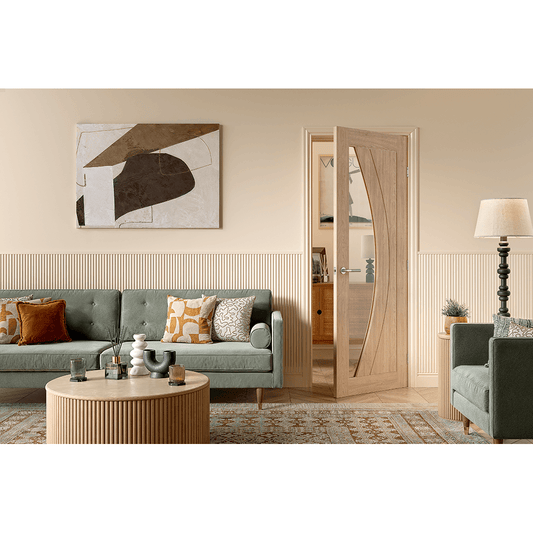
Glazed doors are stocked in every finish we carry. Oak with clear glass is the most ordered combination in Britain. White primed with clear or frosted glass is the brightest and the cheapest. Black glazed doors imitate a steel framed screen and have become the most requested contemporary look. Browse internal oak doors, internal white primed doors and internal black doors.
What glazing costs you
Two things, and they are worth stating plainly. Privacy, which frosted and reeded glass largely solve. And sound, because glass transmits more noise than a solid core. If a room needs quiet, such as a study or a bedroom next to a living room, a solid leaf from unglazed doors will outperform any glazed design, and acoustic wall panels handle the echo inside the room.
Sizes
Standard glazed internal doors are 35mm thick and fire rated versions 44mm. Imperial widths of 686mm and 762mm at 1981mm high cover most rooms, with metric 2040mm heights in newer housing. Glazed doors have less trimming allowance than solid ones because the glazing bead sits close to the edge, so measure carefully against our door size guide and how to measure a door.
Common questions
Can I have glass put into a door I already own?
Not reliably, and not at all on a fire door. Factory glazed doors are built around the aperture, and cutting one on site compromises both the structure and the safety glazing requirement.
Which glass is best for a bathroom?
Frosted or reeded. Both pass light while removing detail.
Do glazed doors lose heat?
Between two heated rooms this is not a meaningful concern. It only matters on external doors, covered in the U values door guide.
Are glazed doors harder to keep clean?
Slightly, and reeded glass more than flat glass. A glass cleaner and a microfibre cloth handle it, and product care covers the frames.
What else does the order need?
Hinges, a latch or lock and a handle set per door, plus a lining and architrave on a new opening. Plan your doors sets it out, and the full range is at internal doors.
Can a glazed door fold?
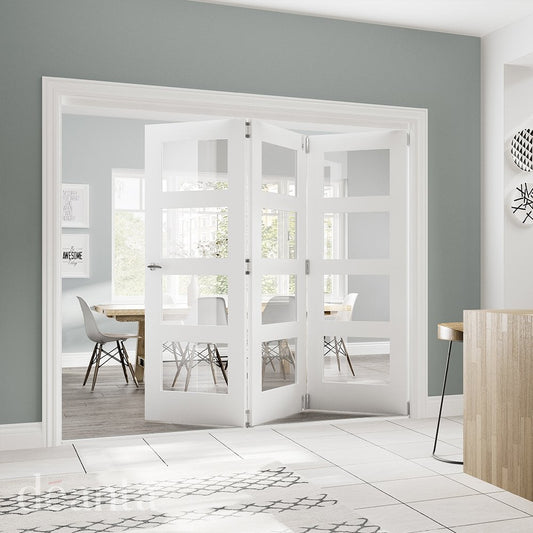
Yes. Pattern 10 and the four light shaker are both made as glazed folding leaves, so a glazed opening can fold back instead of swinging. See bi-fold doors.
Fast delivery
Nationwide delivery, next-day available
Secure payment
Safe and encrypted checkout
Payment options
PayPal, cards and more
VAT included
Only delivery is added at checkout